Two decks.
No laptop.
PajoNiiiR BL-A1800 transforms the DDJ-FLX4 into a complete standalone performance system with Rekordbox media playback, real-time DSP, touch control and independent MAIN and CUE audio.
- Standalone Operation
- Dual-Deck Playback
- Independent MAIN + CUE
- Open-Source Firmware
A self-contained instrument, not an app.
Every path is physical: a rear USB media port, PCM5102A RCA MAIN outputs and a 4.3-inch touch display in a single enclosure. Music is read straight from USB storage — the performance never depends on a computer.
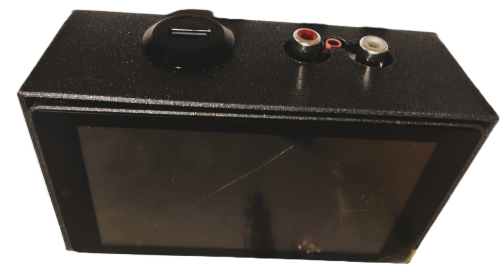
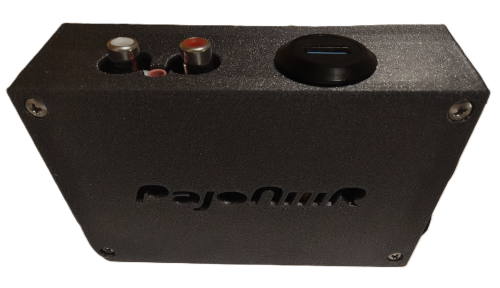
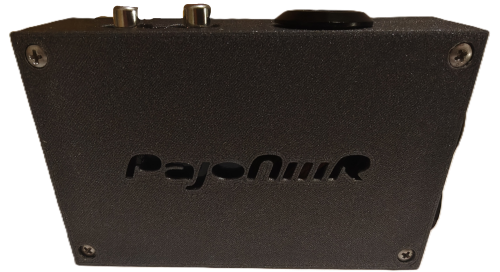
Standalone Performance
Browse, load and perform directly from Rekordbox-exported USB media.
Dual-Deck Engine
Two independent decks provide a complete mixing workflow without a computer.
Independent MAIN + CUE
Dedicated RCA master output and simultaneous DDJ-FLX4 headphone monitoring.
Dual-Processor Architecture
Control, connectivity, playback and audio processing are divided across two purpose-built processors.
One signal chain, clearly divided.
The controller feeds a connectivity processor, which speaks to the authoritative playback engine over a compact two-channel transport.
Everything a set needs, on the device.
Performance
Mixer & Effects
Media & Interface
- ▸Rekordbox USB library
- ▸MP3, WAV and FLAC
- ▸FAT32 and exFAT
- ▸Touchscreen navigation
- ▸Overview, Library, Hot Cues and Settings
- ▸Optional Wi-Fi remote
Audio & Reliability
- ▸PCM5102A RCA MAIN output
- ▸DDJ-FLX4 headphone CUE
- ▸Controller LED feedback
- ▸Automatic reconnect synchronization
- ▸Signed firmware updates
- ▸Dual-slot validation and rollback
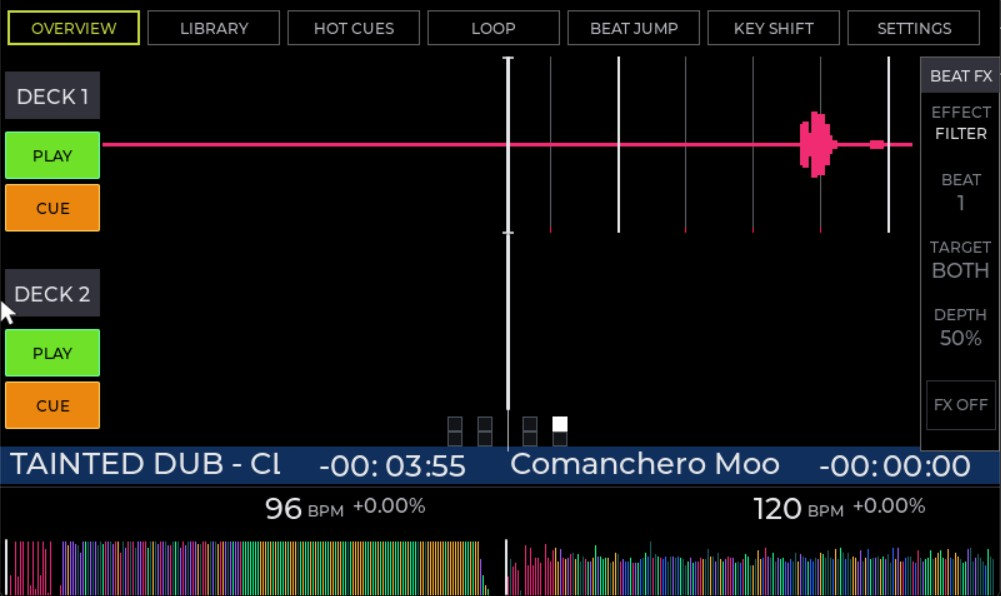
Built to be performed from a touchscreen.
The device provides dedicated Overview, Library, Hot Cues and Settings workspaces on the LVGL interface.
{{ activeCap }}
Two processors. Separated responsibilities.
Control & Connectivity
- →DDJ-FLX4 USB host
- →MIDI normalization
- →Semantic event transport
- →LED output bridge
- →USB headphone streaming
- →Service and firmware access
Playback & Authority
- →Two playback engines
- →Rekordbox library
- →Authoritative deck state
- →Audio mixer and DSP
- →LVGL interface
- →MAIN and CUE routing
- →Controller LED decisions
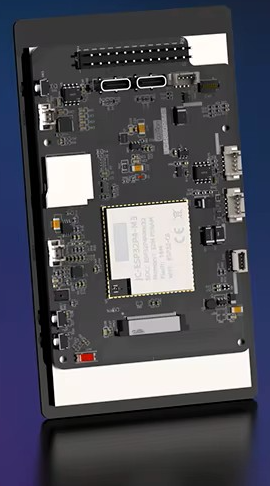
Both processors cooperate — one holds authority.
The ESP32-S3 keeps the controller connected and the LEDs bridged; the ESP32-P4 multimedia board owns every playback, mixing and interface decision. Each processor is dedicated to what it does best, and the two stay coordinated over a single compact transport.
Purpose-built from control surface to audio output.
Deterministic Control
The ESP32-P4 remains the single source of truth for playback, mixer state, timing and visual feedback.
Independent Audio Paths
PCM5102A RCA MAIN output and DDJ-FLX4 USB headphones operate simultaneously for a complete master and cue workflow.
Resilient by Design
Controller-state synchronization, signed updates and automatic rollback keep the dual-processor system coordinated.
From Rekordbox to the dancefloor.
- 01Export music through Rekordbox
- 02Connect the USB drive
- 03Browse the library on the touchscreen
- 04Load tracks to either deck
- 05Perform from the DDJ-FLX4
- 06Monitor CUE through headphones
- 07Send MAIN audio through RCA
Build a controller profile in the browser.
Connect a controller, review its controls, and create a ready-to-use profile without dealing with raw MIDI data.
Open the Profile BuilderPlug in over Web MIDI and the builder detects it automatically.
Move a pad, knob or fader and see each control identified in plain terms.
Export a data-driven profile the system loads directly — no raw MIDI required.
Built in firmware.
Designed for performance.
Explore the architecture, firmware and documentation behind a standalone dual-deck system built with ESP-IDF.